

PAPI Approach
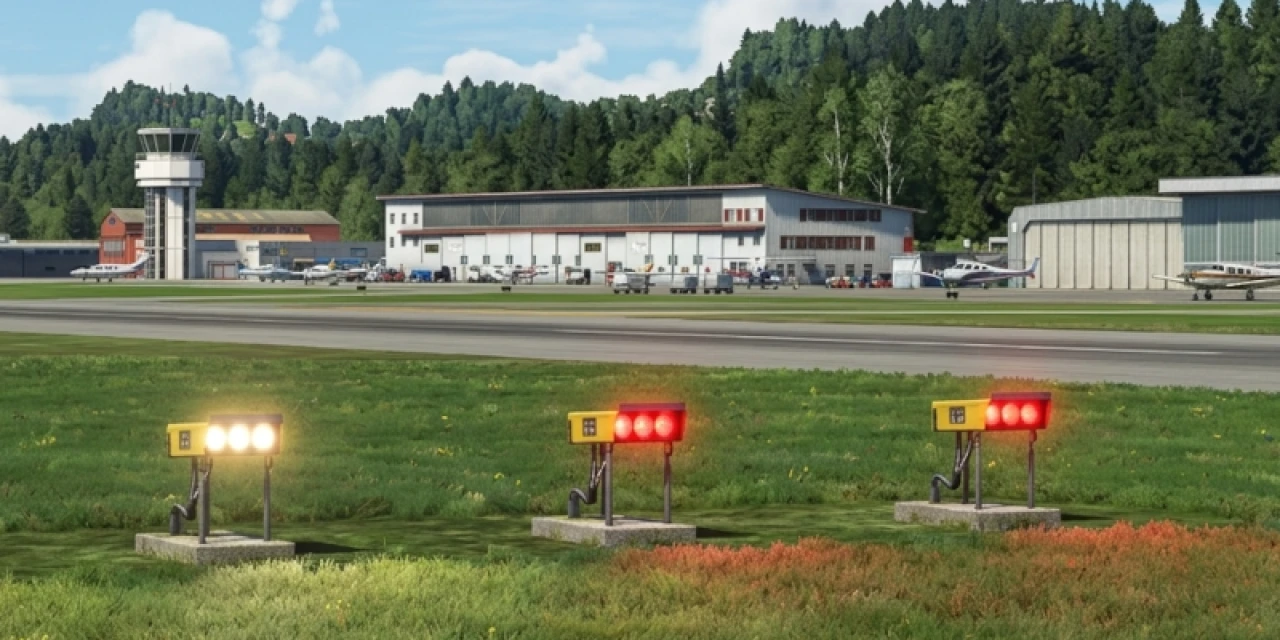
When practicing landings with Aerofly FS, you have probably misjudged your approach at some point and either ended up too high at the runway threshold or had to increase thrust to avoid flying too low. You don’t need GPS or a modern instrument landing system (ILS) to approach a runway in a steady descent. In this tutorial, we’ll show you how to use PAPI lights to recognize in time whether you are too high or too low on final approach.
Before modern assistance systems found their way into cockpits, pilots had to control their descent rate solely by feel, experience, and simple visual landmarks.
To make landing safer and more precise, special visual aids were developed early on to indicate the correct glide path to the runway. One of these systems is the PAPI system (Precision Approach Path Indicator), which we will introduce to you in this tutorial.
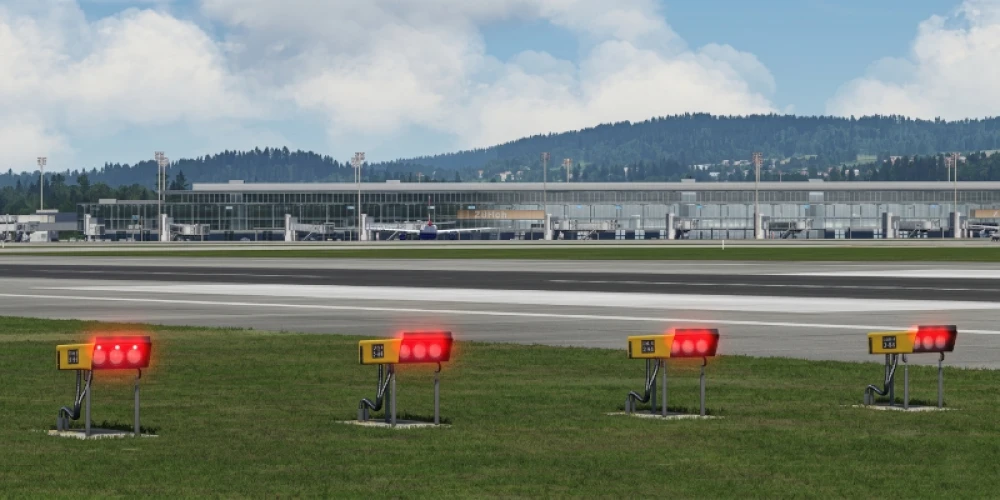
The four next to the runway
PAPI lights are an optical guidance system installed on the ground next to the runway that helps you maintain the correct altitude during the final approach. The system consists of four lights arranged side by side directly next to the runway. You will find this system at all major airports in Aerofly FS. To make it easier to see the colored light cones during the approach, you can set the time of day to dusk.
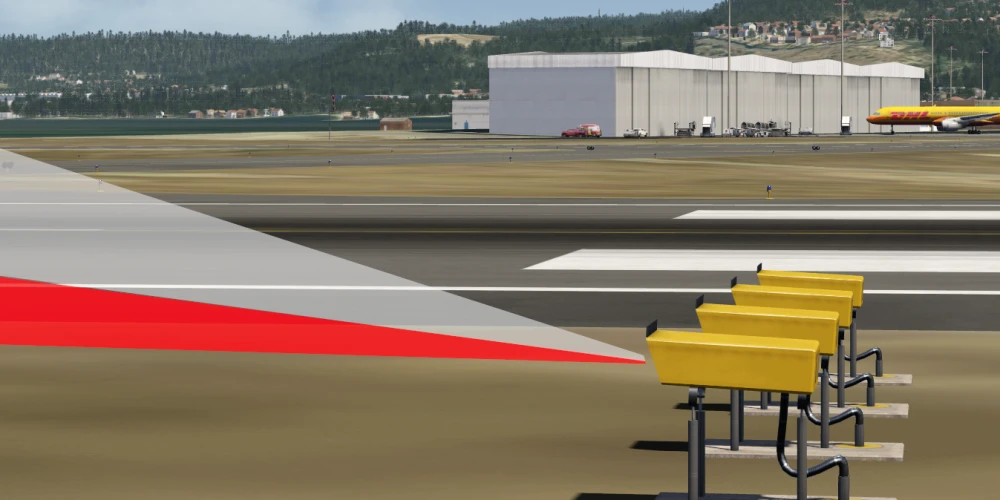
One light - two colors
Let’s first consider just one of the four lights in the PAPI system: if the aircraft is too high, the pilot sees a white cone of light. If it is too low, he sees the lower, red area. The boundary between the colored cones is the optimal glide path, and by default this color boundary has an angle of 3 degrees.
However, a single light would only convey the information “too high” or “too low.” A smooth descent would be virtually impossible, as you would have to correct immediately every time the color changed. The approach would quickly become a constant up and down.
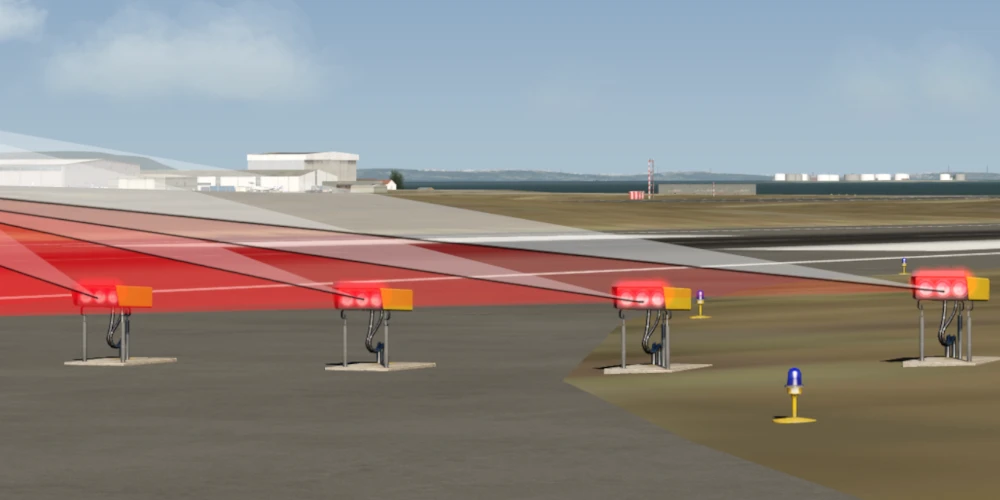
Four lights for a glide path
To ensure that your passengers feel completely comfortable during the final approach, the three additional lights of the PAPI system now come into play. All four lights emit their two-color light cones at staggered angles. If you are significantly above the glide path, you will see the upper white light cone on all four lights. If you are too low, you will see four red lights.
If, on the other hand, the aircraft is perfectly centered on the glide path, you will see two white and two red light cones. Thanks to this staggered arrangement of the four PAPI ground lights, you can now correct your approach much more calmly and precisely than would be possible with a single light.
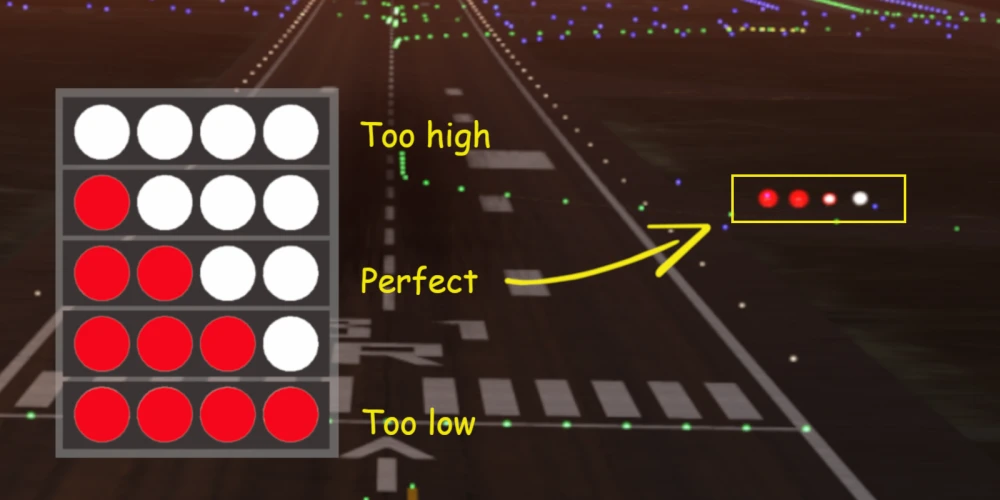
2 Red – 2 White – You are right!
To start with, it’s ideal if you never see more than four white lights (too high) or four red lights (too low). Then you’re well on your way to flying towards the slope at the right speed and with the right descent, rewarding yourself with a perfect landing.
2 Red – 2 White – you’re right!