

Axes and Control Surfaces
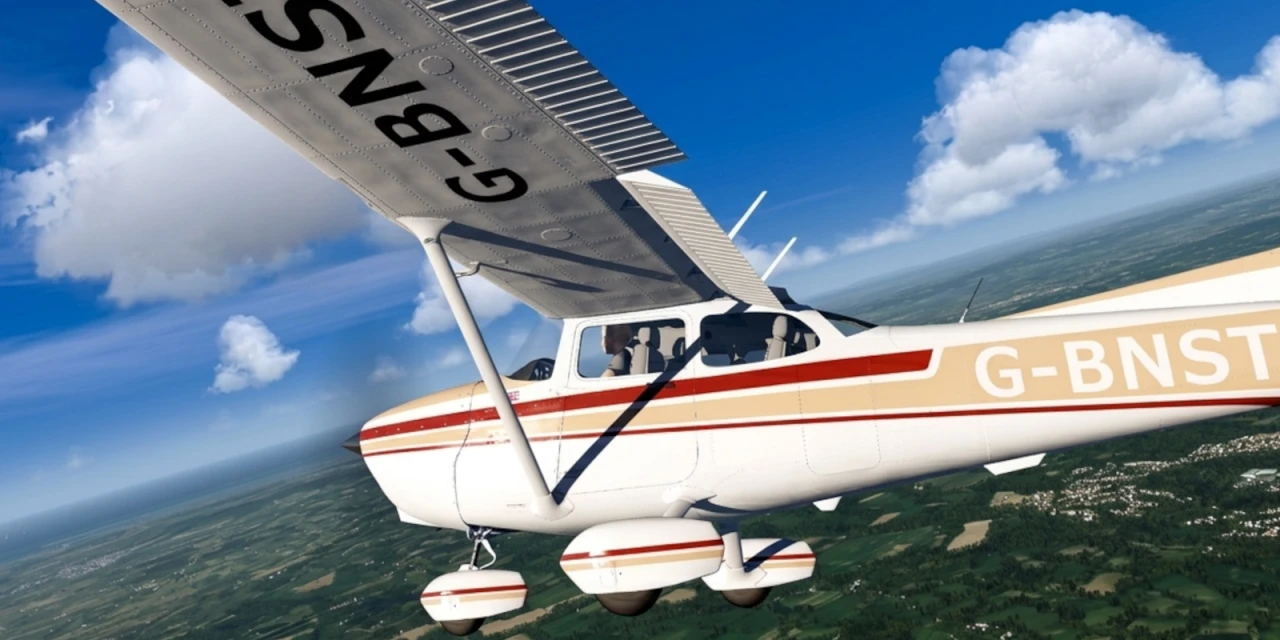
When you fly an aircraft, you don’t simply move straight through the air. Instead, the aircraft is constantly changing its attitude and direction—during takeoff, in cruise, and during landing. These changes can occur unintentionally due to external influences such as air currents, or intentionally through your control inputs. Therefore, it is important to understand how an aircraft behaves in space—more precisely, how it moves about its three axes.
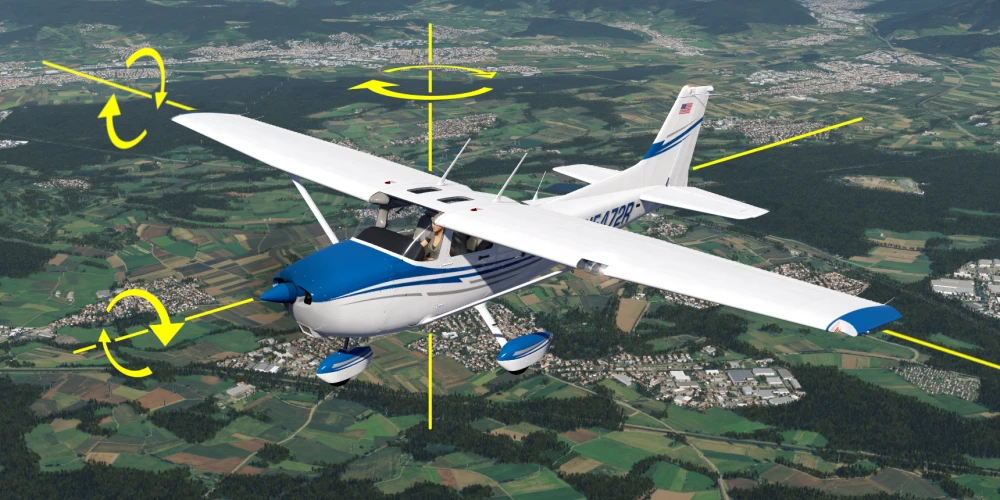
The three axes: longitudinal, lateral, and vertical
The longitudinal axis runs from the nose of the aircraft to the tail. Movements about this axis are called roll. In this motion, the aircraft tilts to the left or right without significantly changing the direction of the nose. This rolling motion is essential for turning, because before you can fly a turn, you first have to bank the aircraft.
The lateral axis extends from one wingtip to the other. Rotation about this axis is called pitch. In this motion, the nose of the aircraft rises or lowers. This determines whether you climb or descend. At the same time, pitch also affects speed:
When you raise the nose, the aircraft initially climbs but at the same time loses airspeed, or requires more power to maintain speed in the climb. The third axis is the vertical axis, which runs perpendicular through the aircraft. Movements about this axis are called yaw. In this motion, the nose turns to the left or right. This movement plays an important role especially during takeoff, landing, and in turns.
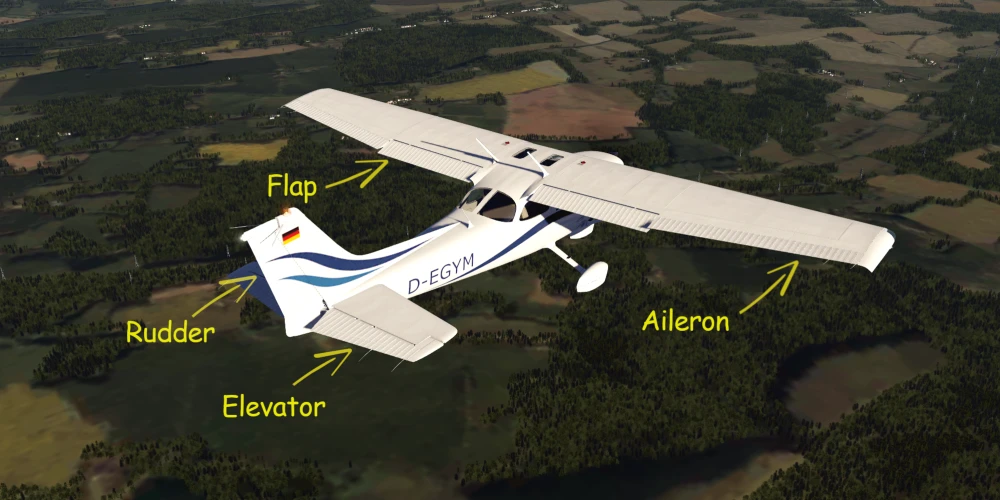
The control surfaces control the aircraft’s attitude.
To control movement about these three axes, an aircraft is equipped with several control surfaces. The most important are the ailerons, elevator, and rudder. The ailerons control movement about the longitudinal axis, i.e. roll. When you input a right roll, the right aileron deflects upward and the left downward. This creates less lift on the right wing and more on the left—the aircraft rolls to the right. At the same time, these differences in lift also produce some secondary, undesirable effects, which we will come back to later when discussing coordinated turns.
The elevator controls movement about the lateral axis, i.e. pitch. When it is deflected upward, the nose rises; when it is pushed downward, the nose lowers. At first glance, this seems to control climb and descent, but in fact you are changing the wing’s angle of attack. And with that, you are already right in the middle of the fundamentals of flying. So remember this: the elevator controls the angle of attack and thereby also indirectly influences airspeed.
The rudder controls movement about the vertical axis and turns the nose left or right. In cruise flight, you will use it only sparingly, but it becomes much more important during takeoff, landing, and in turns.
The flaps are almost always located on the inner section of the wings. Unlike the other control surfaces, they do not directly cause rotation about any of the axes. Instead, they change the characteristics of the wing, or more precisely, its airfoil. When you extend the flaps, you increase the maximum lift, allowing you to fly at lower speeds—ideal for landing.
Coordination in flight
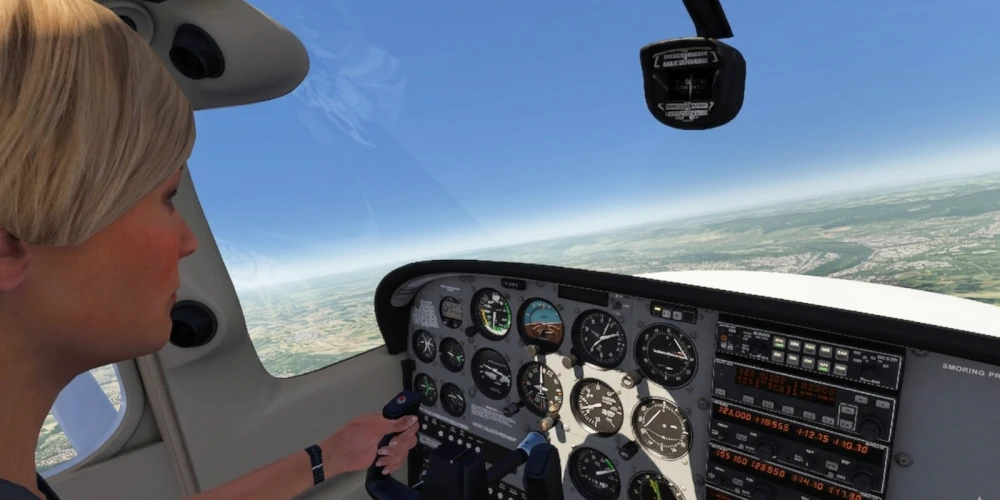
In practice, you will later never use the control surfaces individually. A clean flight always requires the interaction of multiple control inputs. In a turn, you initiate the bank using the ailerons, while coordinating the nose with the rudder to compensate for unwanted effects. At the same time, you must use the elevator to ensure that you do not lose altitude. Still, try experimenting with the effect of each individual control function and the resulting attitude changes about the three axes by using only one control input at a time in Aerofly FS. Only when you understand the aircraft’s response to each control input individually will you be able to properly coordinate combined control inputs later on.